
Bison Fiber: A Material Guide
THE LAND
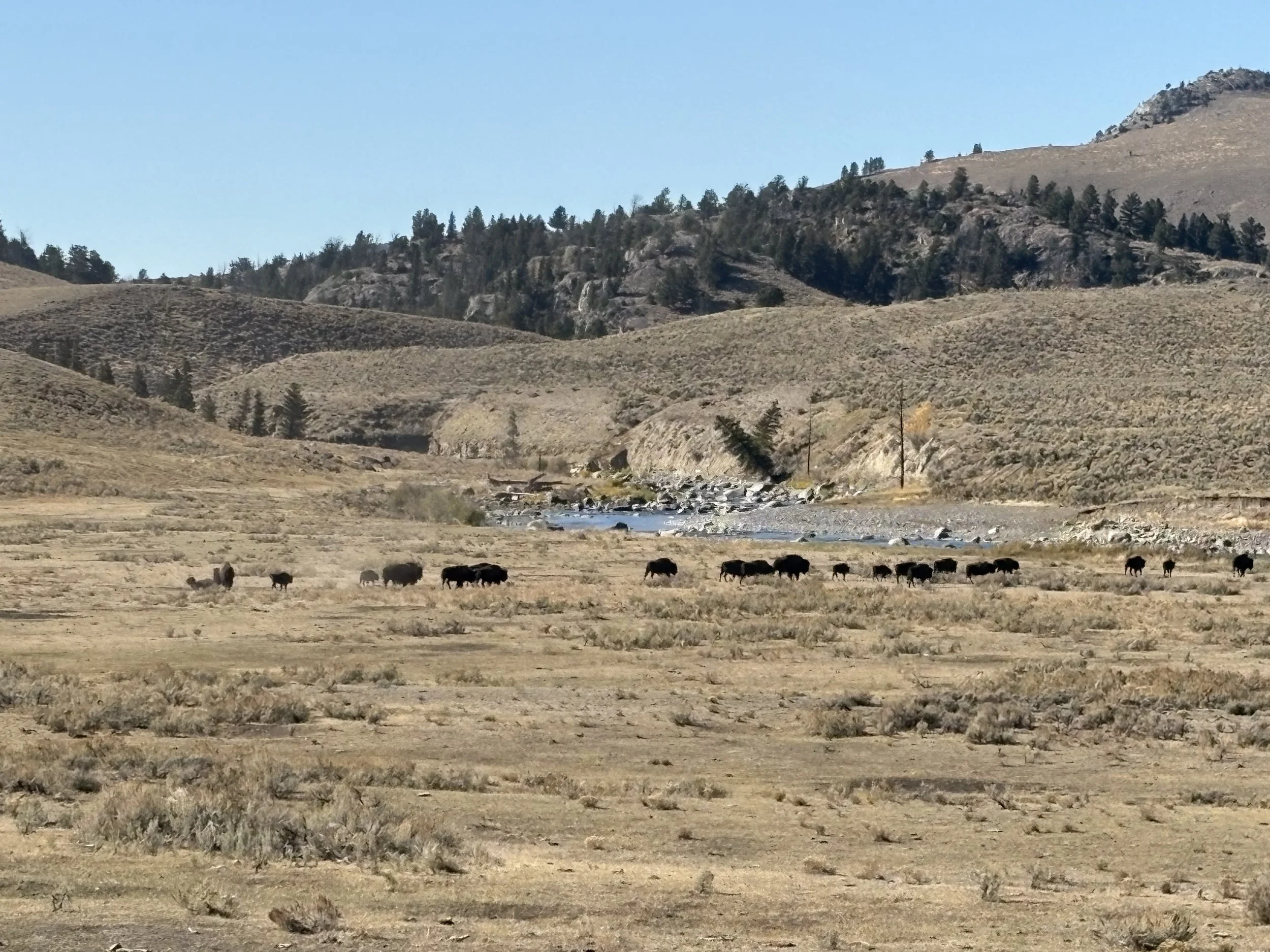
Bison on the Northern Plains, where the winter coat evolved for cold, wind and exposure.
To understand what makes bison fiber remarkable, we have to begin at its smallest measure. Reduce the great animal to one-millionth of a meter, and much of the story of its fiber begins to make sense.
THE DOWN
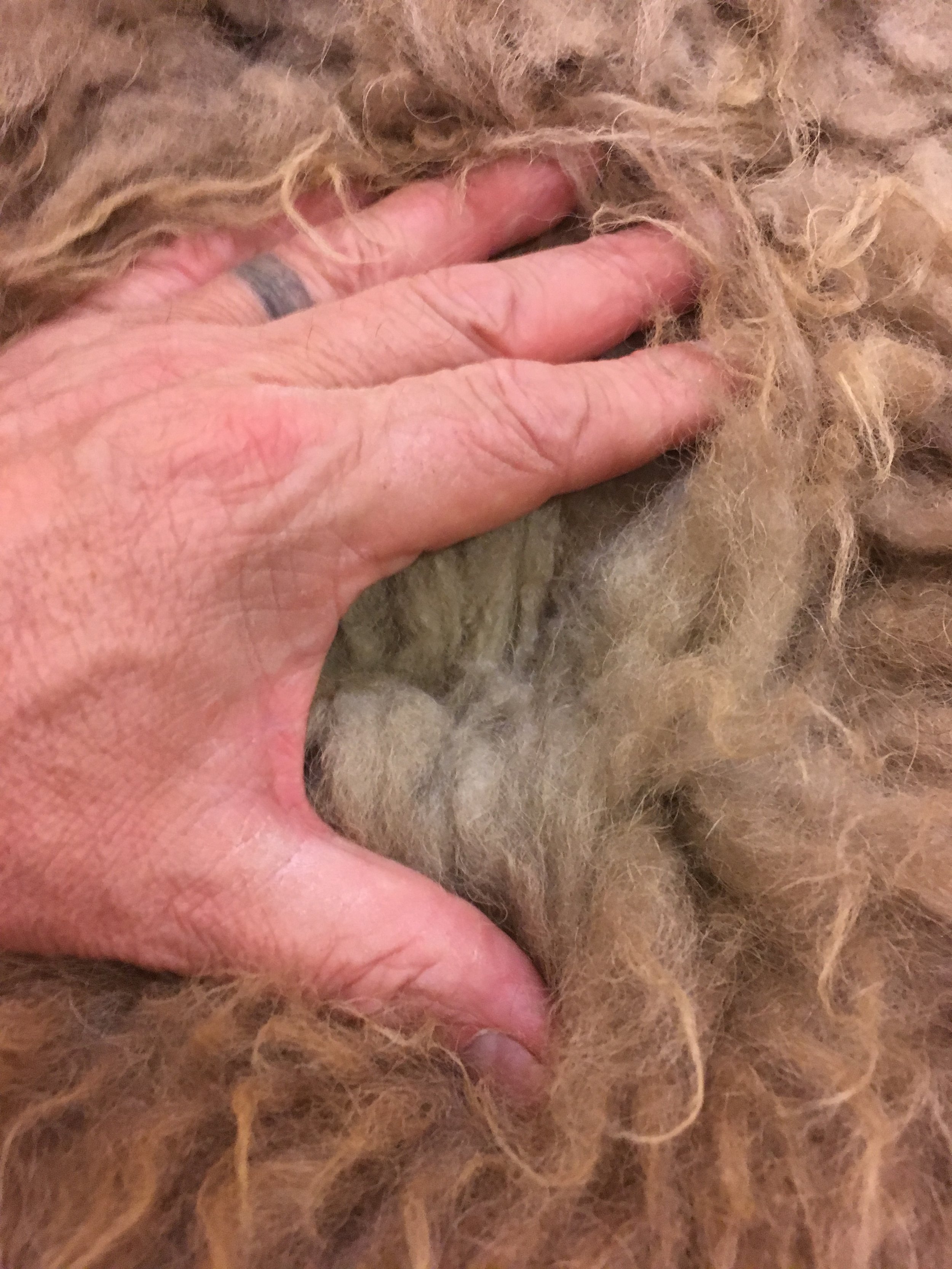
Fine winter down beneath the coarse outer hair.
How Fine Is Bison?
Published research measured dehaired bison down at an average of 17.8 microns.¹ That places bison among the fine animal fibers traditionally associated with luxury textiles.
Ranges are representative and vary by animal, grade and source. MTBFC grades bison down for next-to-skin textiles from approximately 13–21 µm.
These numbers are useful, but natural fibers vary. Age, genetics, body location, season, professional shearing and processing all influence the fiber that eventually reaches the mill.
Ember Heritage's Fiber Blending Philosophy
We blend fibers to bring their best qualities together. Bison is fine, warm and strong; Merino has loft and crimp; alpaca has softness and crimp. The proportions change with the cloth, bison and Merino, bison and alpaca, or all three, but the thinking remains the same.
Ember Heritage applies our experience and fiber knowledge to work with the nature of each fiber, not against it.
Like terroir in wine, a fine textile carries the soul of its origin. The animal, the climate, the season and the land. Bison fiber is scarce by nature; there is only so much of it in any given year. Scarcity comes with a fiber tied this closely to animal, season and place.
A good blend respects the material, allowing each fiber to lend its strength while preserving the fine characteristics of the bison at its center.
Bison & Cashmere
Cashmere gives us a useful reference because most people already know it by touch: soft, light and warm.
Under U.S. standards, cashmere must have an average fiber diameter of 19 microns or less, along with requirements governing coarse fibers and variation in diameter.² Commercial cashmere commonly falls between approximately 14 and 19 microns.
Published testing of dehaired bison down found an average of 17.8 microns.¹
They occupy much of the same territory of fineness. Where they part ways is origin.
Most of the world's cashmere comes from China and Mongolia. Bison are native to North America. Their fiber begins here, and through the Montana Bison Fiber Collective, it stays here.
Our professional shearing crews remove the fiber at its source, then grade, sort and store each clip to preserve its quality and provenance. From there, we work with North American processors and mills to scour, dehair, spin and weave it into cloth. The distance between animal and finished textile is local, traceable and distinctly American.
Bison & Qiviut
Qiviut, the winter undercoat of the muskox, makes another useful comparison.
Like bison down, it evolved on a large northern animal as protection from winter rather than through selective breeding for textile production. Wild muskox qiviut averages approximately 17–18 microns, very close to the published 17.8-micron average for dehaired bison.³
The fibers are nevertheless quite different. Qiviut generally has a considerably longer staple, approximately 80–130 mm compared with the 28 mm dehaired mid-length reported for bison.¹ ³
Similar fineness does not mean the same fiber.
What Is a Micron?
I Thought We Were Talking About Bison.
A micron is one-millionth of a meter. In textiles, we use microns to measure the diameter of an individual fiber. The lower the number, the finer the fiber.
Fine cashmere is measured in the teens. So is fine bison down.
This fineness is one reason both feel so soft against the skin. Fine fibers bend easily rather than pressing back against it. With bison, fineness is also part of what makes the fiber warm.
Why Does Micron Matter?
The finer the fiber, the more individual fibers can occupy a given area. Bison's winter down is made up of an extraordinary number of very fine fibers, creating a dense insulating layer without much weight.
Unlike the wool of a domestic sheep, bison down has very little crimp. It wasn't bred over generations for the spinning mill. It evolved on the animal, on the plains, for survival in the coldest conditions and the harshest winds of the North American winter.
This difference helps explain how we use it.
Bison brings fineness, softness, strength and warmth. When blended with a high-amplitude Merino wool or alpaca, the domestic fiber brings more pronounced crimp and loft.
Each fiber brings a different strength, and together they make a better textile.
Knowing the character of each fiber determines how we use it. With bison, professional shearing, sorting and grading preserve those qualities from the start, making the shearing as important as the fiber itself.
| Fiber | Typical Micron Range |
|---|---|
| Bison Down | 15–20 µm |
| Cashmere | 14–19 µm |
| Qiviut | 11–18 µm |
| Fine Merino | 17–22 µm |
| Alpaca | 18–30+ µm |
THE CLIP
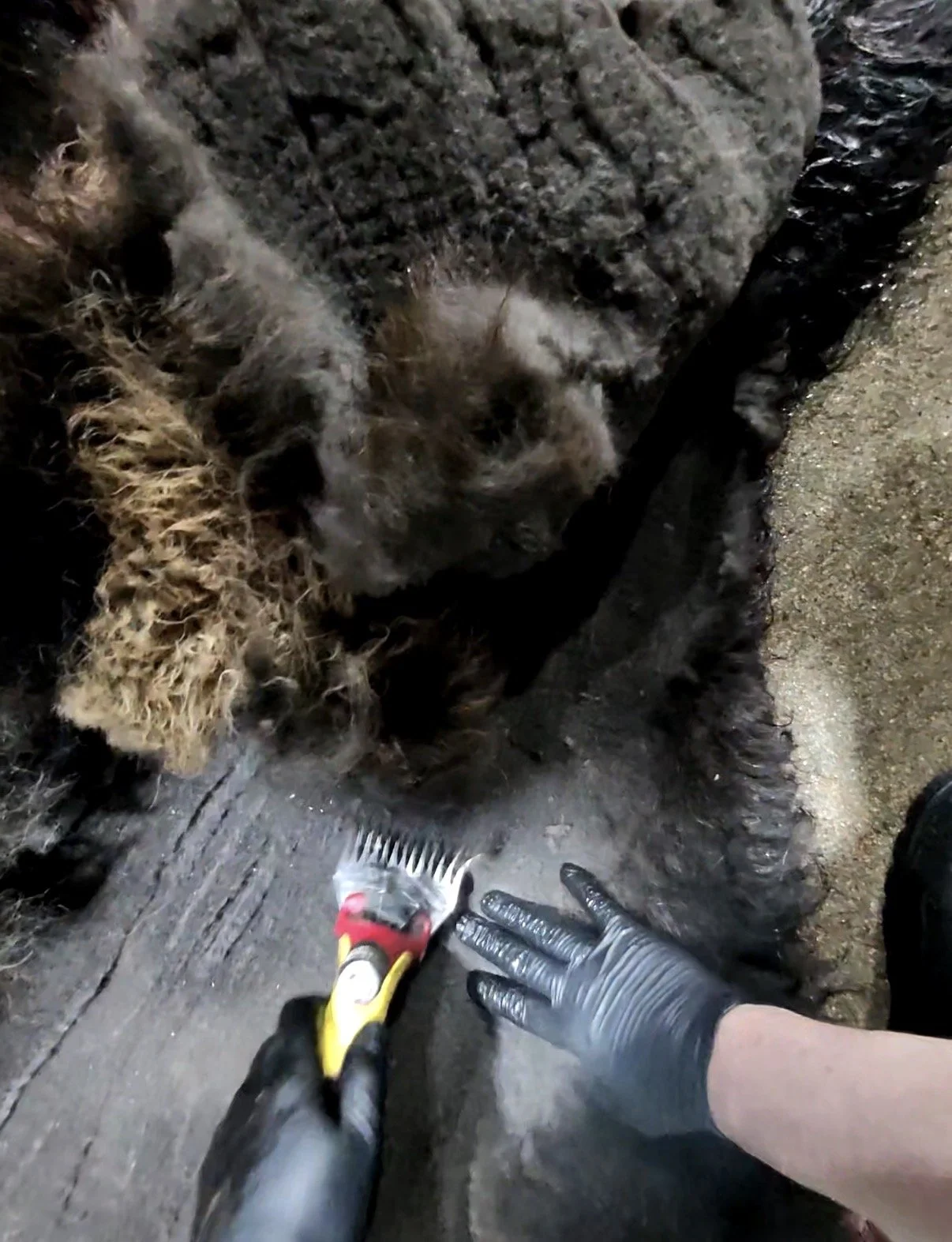
A bison coat being professionally shorn, preserving the clip for sorting and grading.
The Bison Coat
A bison coat is made for the animal, not the mill. Beneath the coarse outer hair lies the fine winter down we use for textiles.
At Ember Heritage, our years in the shearing shed and knowledge of natural fiber inform our process, preserving the longest possible staple while allowing us to sort and grade the fiber at its source. The clip then moves to dry storage for further grading, protecting its quality and provenance until it goes to scour.
Great textiles don't begin at the mill. They begin with the clip.
THE COAT
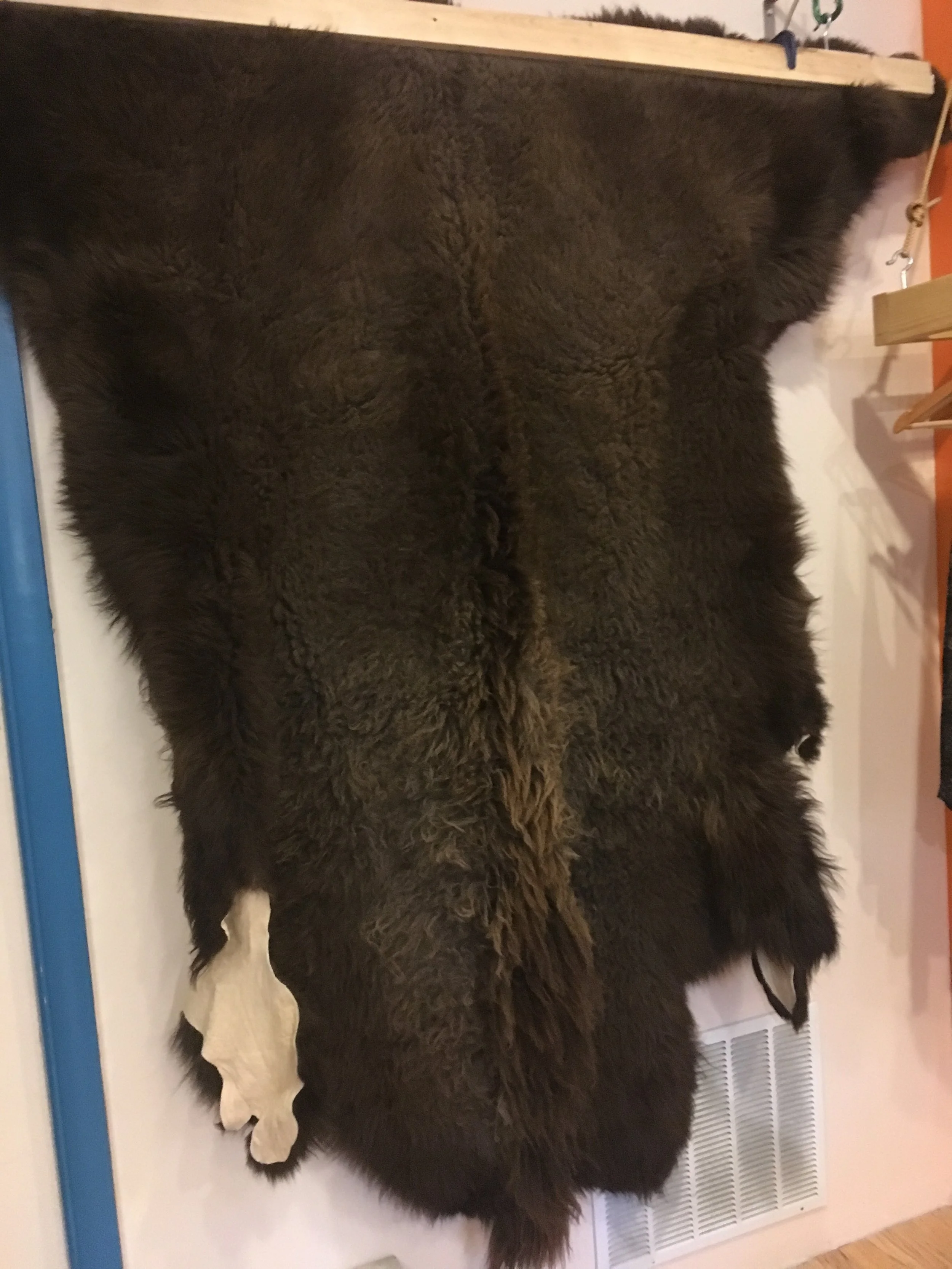
A complete bison hide showing the natural variation in coat structure across the animal.
Why Bison
Bison grow a fine winter down beneath the coarse outer hair most of us recognize. This soft, strong fiber protects the animal through a Northern Plains winter and makes an exceptional textile.
Bison down is remarkably soft, warm and light. It is also local.
Native to North America, bison remain part of our landscape and agricultural system. Ember Heritage carries that provenance through the textile, from professional shearing to North American processing and manufacture.
Strength & Character
Micron tells us how fine a fiber is. Other measurements tell us more about how it behaves.
| Property | Published Bison Measurement |
|---|---|
| Mean diameter after dehairing | 17.8 µm |
| Tenacity | 8.7 cN/tex |
| Extension at break | 39.3% |
| Dehaired mid-length | 28 mm |
| Clean washing yield | 76.5% |
| Clean fine-fiber yield | 56.4% |
Source: McGregor, 2012.¹
These measurements give us a clear picture of how bison fiber performs. While testing methods vary between studies, the data places bison alongside the noble fibers of cashmere, qiviut, fine Merino and alpaca in fineness, strength and elasticity, with characteristics well suited to fine textiles.
Moisture
In our experience working with both fibers, bison down behaves as a hydrophobic fiber and moves moisture exceptionally well, comparable to or better than alpaca.
Alpaca provides a useful benchmark. Textile Exchange describes alpaca as hydrophobic, naturally water resistant and moisture wicking, with a reported water retention rate of approximately 8%, compared with 16 to 20% for wool.
Bison is still new to the modern natural fiber industry, and much of its performance remains undocumented by contemporary textile standards. MTBFC is building a body of data, testing bison by the same standards used to understand the established noble fibers.
From Bison to Fiber
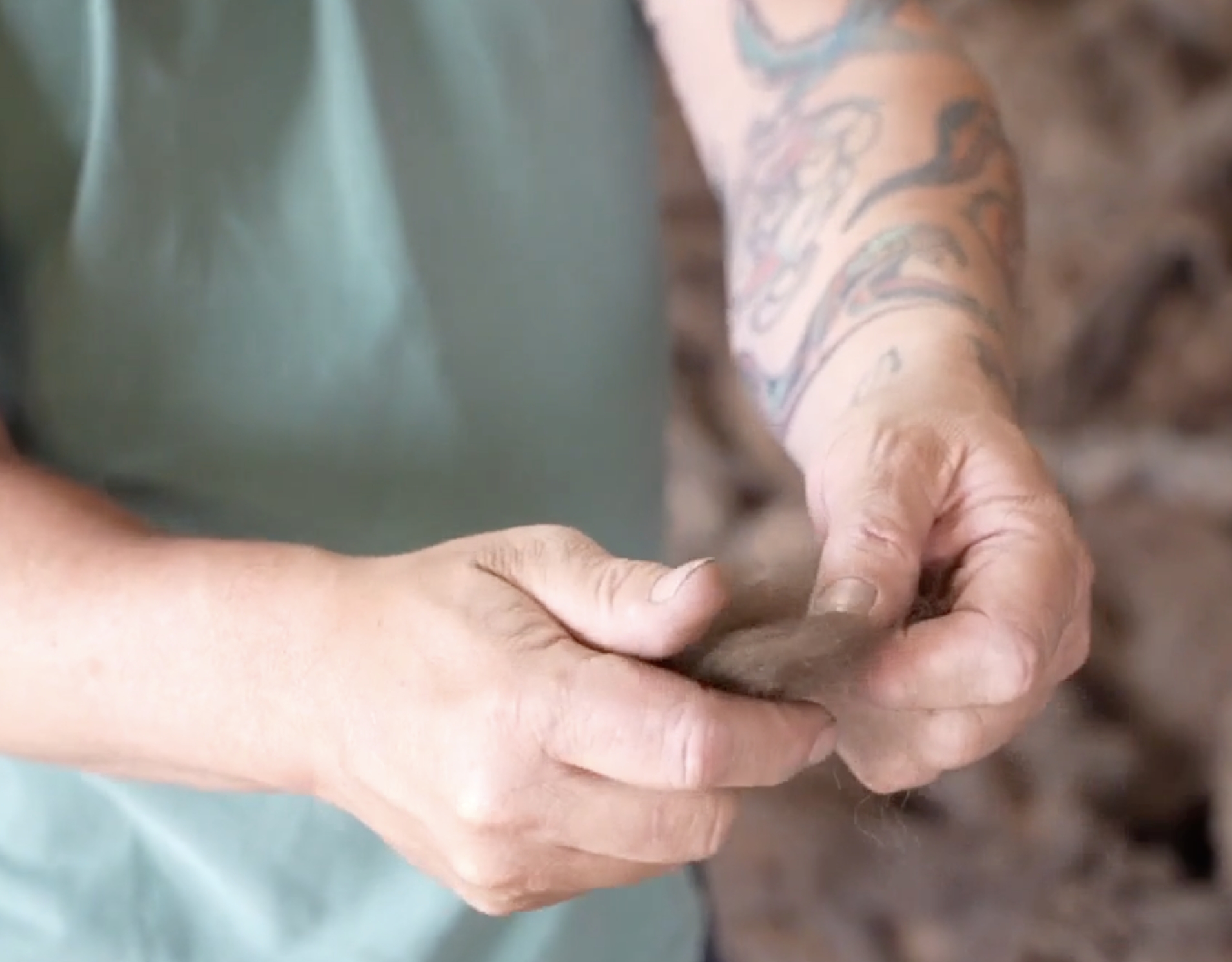
Professional shearing is the first step we take to ensure the quality of the fiber is preserved. Our shearing crews remove the fiber at its source, where we carefully sort and grade it, then move it to dry storage for further sorting and grading. This protects the clip and preserves its provenance until it goes to scour.
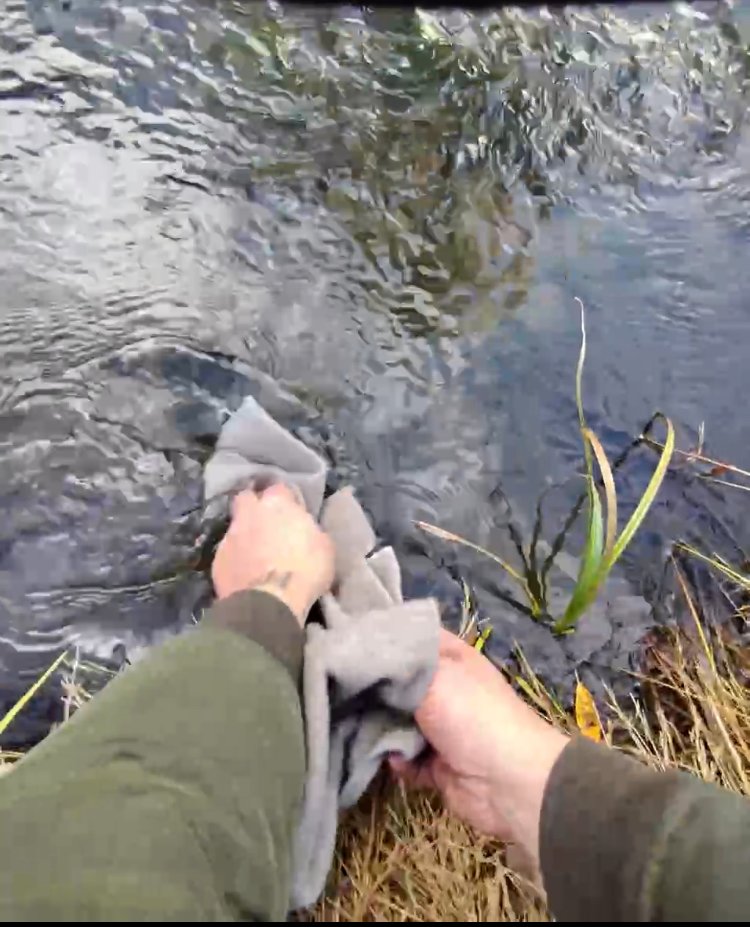
Scouring removes dirt, debris and natural oils from the fiber. From there, the clean fiber is opened and dehaired, separating the fine down from the coarse fibers and guard hair that grow alongside it. This step is critical. Micron alone does not determine the hand of a finished textile if coarse fibers remain in the lot.
Each stage changes both the quality and the amount of fiber that remains. One published study reported a 76.5% clean washing yield and a 56.4% clean fine-fiber yield.¹ Commercial yields vary with the animal, body location, shearing, cleanliness and processing.
Beginning as freshly shorn bison fiber, the clip is distilled through scouring and dehairing until only the fine down remains for the finished textile.
Does Bison Fiber Contain Lanolin?
Bison do not produce the lanolin associated with sheep's wool. Their fiber still carries natural oils, dirt and material from the animal and its environment, which is why proper scouring remains an essential part of preparing the fiber for textiles.
The Rarity of Bison Fiber
Bison fiber is scarce by nature. Professionally shorn, sorted and graded fine down is scarcer still. Each animal grows a single winter coat, and only a portion of it will become fine textile fiber.
Scarcity places a greater value on how each clip is handled. Professional shearing begins the process, followed by careful sorting and grading before the fiber passes to a small community of craftsmen chosen for their skill. MTBFC and Ember Heritage have carefully curated this community, drawing from domestic and international textile traditions to work with like-minded craftspeople chosen for their skill, exacting standards and commitment to the material.
From shearing through finished cloth, MTBFC maintains the grade, provenance and character of each clip. At every stage, the fiber passes to craftsmen chosen for their command of the process, judgment of the material and knowledge refined through generations of dedication to their craft.
Sources & Further Reading
1. McGregor, B.A. (2012).Production, properties and processing of American bison (Bison bison) wool grown in southern Australia.Animal Production Science.
2. U.S. Wool Products Labeling Act / Federal Trade Commission. Cashmere is defined as the fine dehaired undercoat of the cashmere goat with an average diameter not exceeding 19 microns, subject to additional requirements concerning coarse fibers and variation.
3. University of Alaska Fairbanks. Research and extension literature concerning muskox qiviut and fiber characteristics.
4. The Woolmark Company / Australian Wool Innovation. Technical literature concerning Merino fiber diameter and wool characteristics.
5. Peer-reviewed alpaca fiber research. Published studies examining alpaca fiber diameter and physical characteristics.
6. Textile Exchange.Introduction to Alpaca Fiber, fiber characteristics and moisture behavior.
Natural fibers vary. Measurements depend on animal, age, body location, season, professional shearing, preparation and testing method. Comparative figures on this page are reference points rather than standardized head-to-head performance tests.